
AI-Assisted Tools in Aesthetic Practice: A Cautious Overview
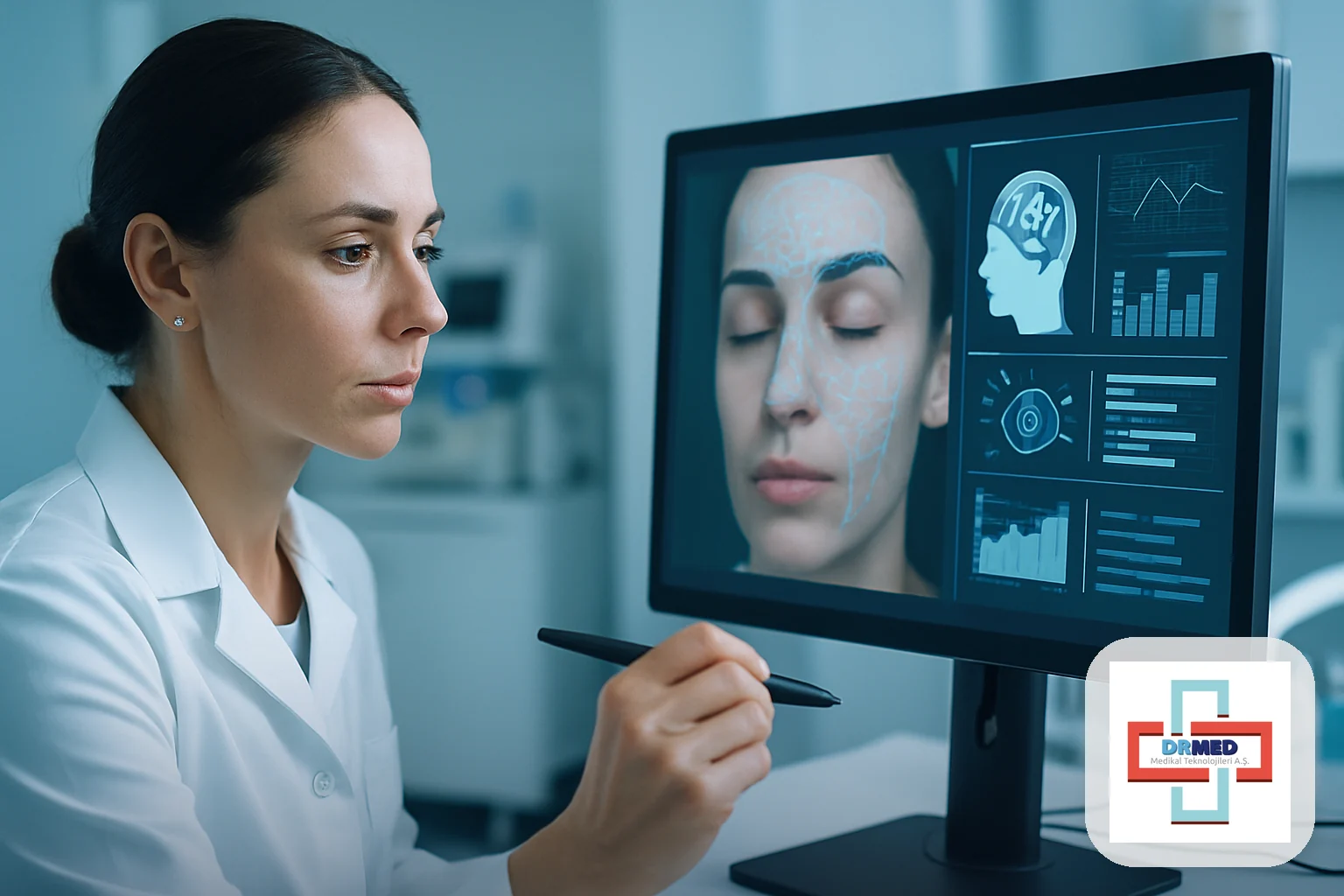
Artificial intelligence tools are increasingly marketed to aesthetic clinics for skin analysis, treatment planning support and patient communication. Some of this is genuinely useful software engineering; some of it is enthusiasm ahead of evidence. For clinics and distributors evaluating these tools, the more useful question is not "is AI good or bad" but "what, specifically, does this tool do, and what is it validated to do."
What These Tools Actually Do
Most AI-assisted aesthetic tools fall into a small number of categories. Skin imaging and analysis software captures standardized photographs and scores features like texture, pigmentation or wrinkle depth against a reference dataset. Simulation or visualization tools generate a projected "after" image based on a planned intervention. Documentation and charting assistants help structure consultation notes or generate patient-facing summaries. Each category carries a different level of technical maturity, and conflating them leads to overstated claims.
The Evidence Gap Between Categories
Image-analysis software that scores objective, measurable features (redness, pore count, wrinkle depth) against a validated reference set is the most mature category, though performance still depends heavily on lighting, camera standardization and the training population used. Predictive simulation tools, which project what a face will look like after a given treatment, are a different matter: they are illustrative aids, not validated clinical predictions, and the evidence base for how closely simulated outcomes track real ones is still limited and heterogeneous across vendors. Clinics should treat a simulated "after" image as a conversation aid, not a promised result.
Regulatory Status Is Not Uniform
Under frameworks like the EU Medical Device Regulation, software can itself qualify as a medical device when it is intended to inform a diagnosis or treatment decision, which brings CE marking, a defined intended purpose and post-market obligations with it. Many consumer-facing skin-scanning apps are explicitly positioned as wellness or cosmetic tools outside that scope, precisely to avoid those obligations. Buyers evaluating a platform should ask directly whether it is classified as a medical device in the markets where it will be used, and if not, what claims it is legally permitted to make. This distinction matters more than any marketing description of "AI-powered."
Data Handling and Patient Privacy
Aesthetic AI tools typically process facial images, which are biometric and highly identifiable data. Before adopting a platform, a clinic should confirm where images are stored and processed, whether they are used to further train the vendor's models, the retention and deletion policy, and whether the vendor's data processing agreement meets the clinic's applicable privacy obligations (GDPR-equivalent frameworks in most relevant markets). A tool's clinical usefulness does not substitute for a clean answer on data governance.
Where the Technology Genuinely Helps Today
The more defensible, current use cases are administrative and communicative rather than diagnostic: structuring consultation documentation, standardizing before/after photography protocols, and helping patients visualize the type of change a modality category can produce in general terms. Used this way, AI tools support informed consent conversations rather than replacing clinical judgment. The technology is progressing quickly, and some categories, particularly objective image analysis, are likely to mature further. Distributors and clinics are better served by evaluating each specific tool against its validated intended purpose than by treating "AI-assisted" as a feature that speaks for itself.
The Takeaway
AI-assisted tools in aesthetic practice span a wide range of technical maturity, from validated image-analysis software to illustrative simulation aids with limited outcome evidence. Regulatory classification, data handling and the specific claim being made all vary by vendor and by tool. Clinics and distributors should evaluate each tool on its documented intended purpose and evidence base rather than on the "AI" label alone, and clinical decisions should always rest with the treating professional, not the software's output.
This article is educational and does not constitute medical advice. Product selection, dosing and administration must always be performed by a qualified healthcare professional.