
Cold Chain Data Loggers: Types and Best Practice
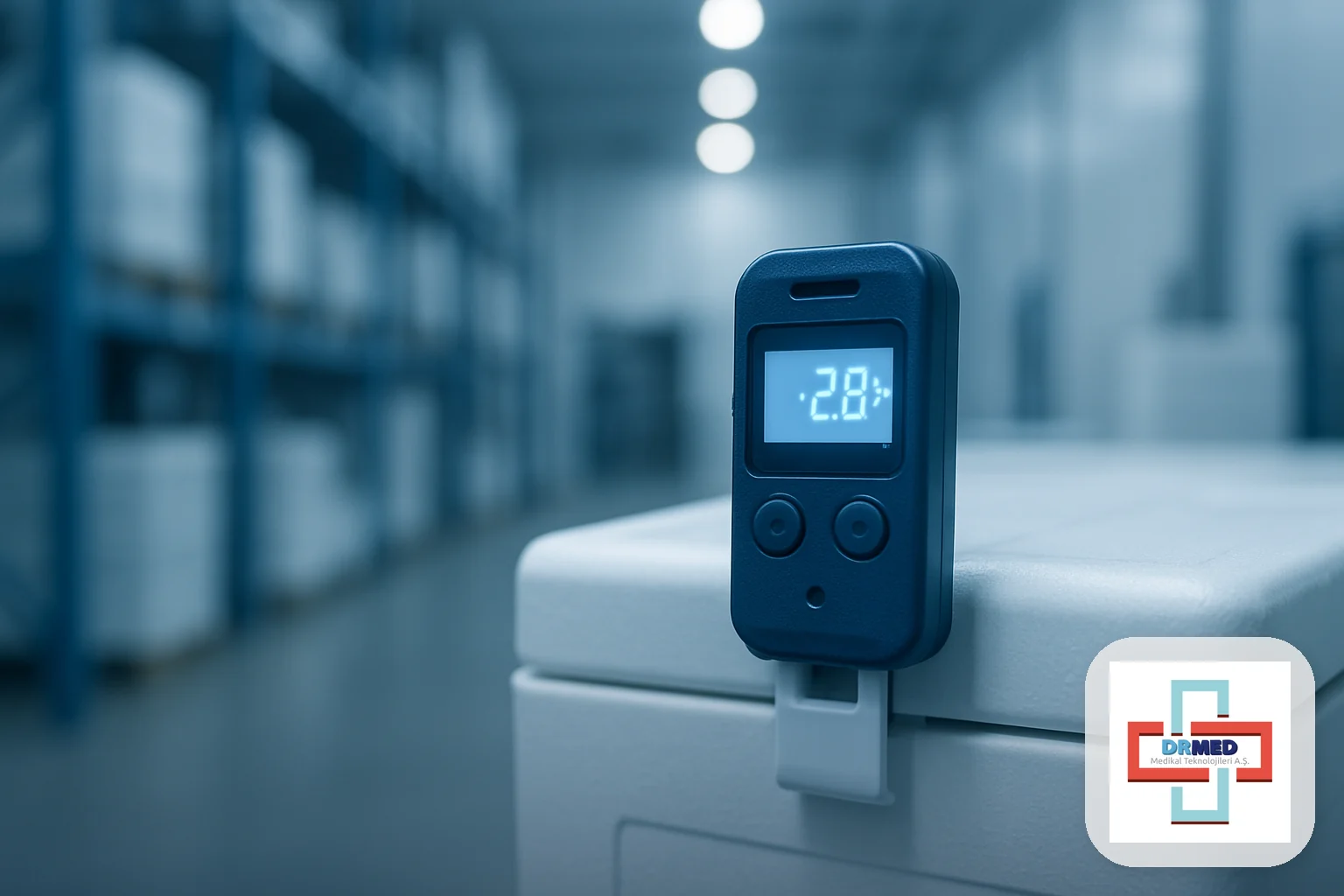
A cold chain is only as trustworthy as the evidence behind it. Anyone can claim a shipment "stayed cold", a data logger is what turns that claim into a timestamped, auditable record. For distributors and institutional buyers handling temperature-sensitive medical and aesthetic products, understanding what these devices actually measure, and how they should be used, is a practical part of quality due diligence.
What a data logger actually records
A data logger is a small instrument that measures temperature (and sometimes humidity) at set intervals and stores the readings, usually with a timestamp, for later review. Unlike a simple threshold indicator that only shows "exposed" or "not exposed," a logger produces a continuous curve, so a reviewer can see not just whether a limit was breached, but for how long and by how much. That distinction matters: a two-minute excursion during loading is a very different risk than two hours above range in transit.
Single-use vs reusable loggers
- Single-use (disposable) loggers travel inside the shipment and are typically discarded, or returned for data extraction, after one journey. They are common for one-way distribution and are usually the lower-cost option per shipment.
- Reusable loggers are recovered, downloaded and redeployed. They cost more upfront but suit closed-loop networks, for example, a distributor's own fleet moving between a central warehouse and regional depots.
- Chart recorders, the older mechanical or simple electronic devices that produce a printed temperature trace, are increasingly replaced by digital loggers because digital records are easier to archive, search and share with a Notified Body or customer on request.
Real-time and connected loggers
A growing category of loggers adds connectivity (Bluetooth, GSM/cellular, or GPS) so temperature (and sometimes location) can be checked mid-transit rather than only after arrival. For long international lanes or high-value biologics, this allows an excursion to be caught and acted on while the shipment is still moving, rather than discovered only at receiving. The trade-off is cost and battery management, so connected loggers are usually reserved for the highest-risk or highest-value lanes rather than every shipment.
Placement and calibration matter as much as the device
A logger is only useful if it reflects what the product actually experiences. Good practice includes:
- Placing the logger near the product, not just anywhere in the box, a sensor taped to the outside of a shipper reads ambient conditions, not the payload's actual temperature.
- Using a calibrated device with a current, traceable calibration certificate; an unverified sensor undermines the whole record.
- Matching the logging interval to the risk: a shorter interval (e.g. every few minutes) gives finer resolution for short, high-risk transit legs.
- Starting and stopping the logger at the right points: activation at packing and data retrieval at receipt, so the record covers the full door-to-door journey.
Reading the data: what happens after arrival
A logger only creates value if someone reviews it. On receipt, the recorded curve should be checked against the product's approved storage range, and any excursion should be assessed against the product's documented stability budget (how much time out-of-range a product can tolerate before quality is called into question) a determination that belongs to the manufacturer's quality documentation, not an ad hoc judgment call. That review, and the decision it leads to, should be recorded and retained alongside the shipment's other batch documentation.
The takeaway
A data logger does not, by itself, protect a shipment, the packaging and process do that. What the logger provides is proof: an auditable record that lets a buyer, a distributor or a regulator verify that a validated cold chain actually held. Choosing the right logger type, placing it correctly, and reviewing the data on arrival are what turn a temperature-controlled shipment from an assumption into documented fact.
This is general educational information, not legal or regulatory advice; consult the current official texts and your competent authority.