Face Shields and Eye Protection: What EN 166 Certifies
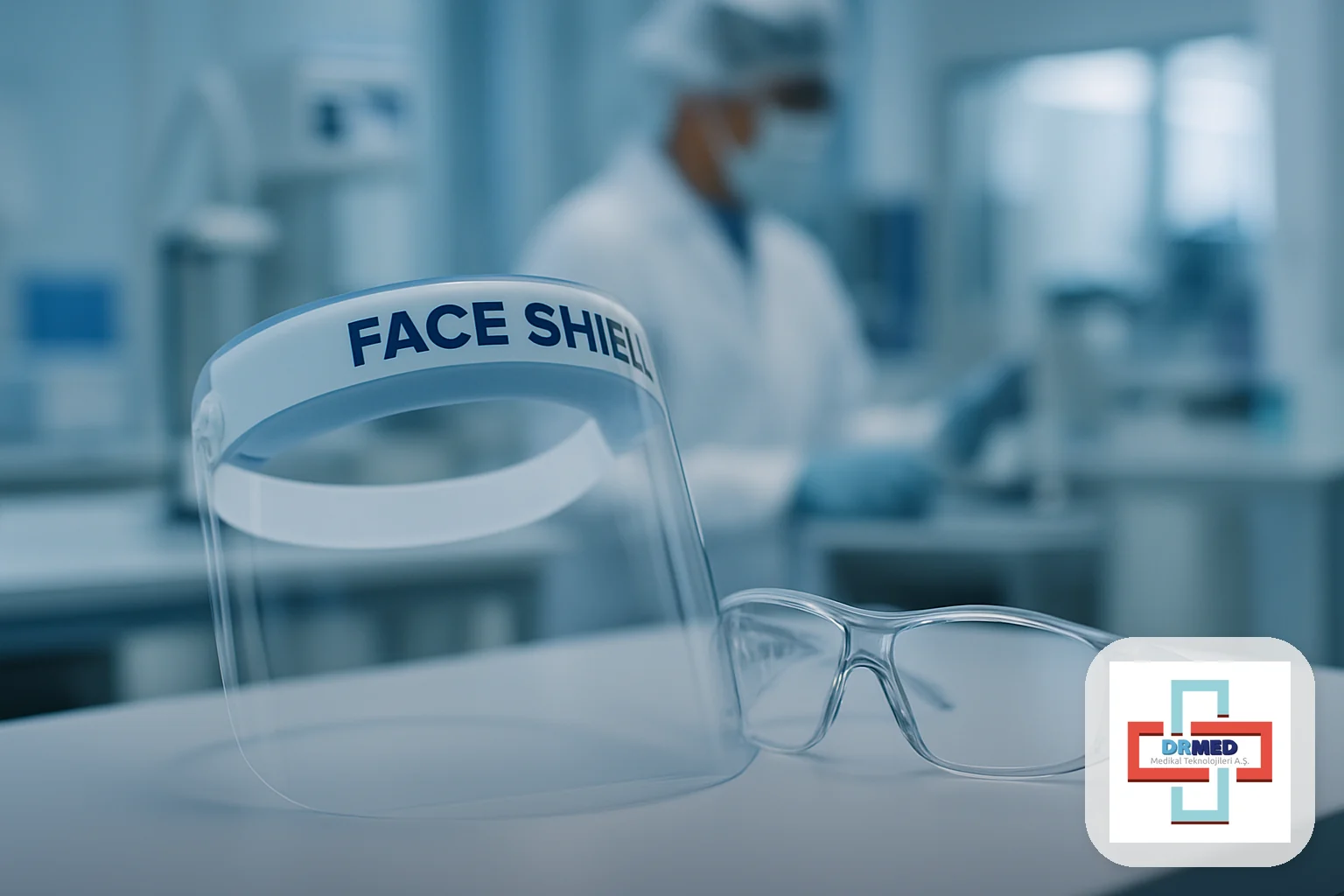
Face shields and safety eyewear are often filed together under "eye protection," but they are tested and marked differently under the same core European standard. For institutional buyers, knowing what EN 166 actually certifies (and where a given product's protection stops) is a practical part of specifying and stocking this equipment correctly.
What EN 166 Covers
EN 166 is the base European standard for personal eye and face protection, covering safety spectacles, goggles, face shields and certain welding visors under one framework. It is not a single pass/fail grade. Instead, it sets baseline requirements for mechanical strength and optical quality, then layers on optional markings that identify which specific hazards (liquid droplets, dust, gas, or molten metal, among others) a particular product has been tested against.
Reading the Markings
A compliant product carries codes on both the frame and the lens or visor, and the two should be checked together rather than assumed to match:
- Optical class (1, 2 or 3): indicates the quality of vision through the lens; class 1 is suited to prolonged wear.
- Mechanical strength symbol:
S(increased robustness),F(low-energy impact),B(medium-energy impact) orA(high-energy impact). - Field-of-use symbols: for example
3(liquid droplets or splash),4(dust),5(gas and fine particles),8(electric arc), or9(molten metal and hot solids).
A frame marked for one hazard paired with a visor marked for another does not add up to protection against both; the relevant marking must be present on the component actually doing the shielding.
Face Shields, Goggles and Spectacles Are Not Interchangeable
| Product | Typical coverage | Seals to face? | Best suited for | |---|---|---|---| | Safety spectacles | Eyes only | No | Basic impact risk | | Goggles | Eyes, sealed | Yes | Dust, fine particles, gas | | Face shield | Full face | No | Splash and droplet deflection |
A face shield offers broad facial coverage and is effective at deflecting splash and larger droplets away from the eyes, nose and mouth, but because it does not seal against the face, it does not provide the same barrier against fine aerosols or gas that a sealed goggle does. A safety spectacle protects against impact but offers minimal splash resistance. Selecting between them is a matter of matching the product to the actual exposure risk, not assuming any one option is a universal upgrade over the others.
Why Combination Use Matters
In clinical and procedural settings with a recognized splash or droplet risk, a face shield is generally used as an adjunct to (not a substitute for) a primary barrier such as a medical mask or respirator, since a shield alone leaves the lower face and breathing zone unsealed. Procurement decisions are best made around the actual task and exposure profile, in line with the facility's own infection-control and PPE protocols, rather than treating "face protection" as a single interchangeable category.
What to Verify Before Buying
- The exact standard and marking combination printed on both frame and visor (for example, "EN 166 3 B"), not just a generic "EN 166 certified" claim.
- CE marking, with a Notified Body number where the product category requires independent assessment.
- Test documentation from an accredited laboratory supporting the specific impact and splash-resistance claims made.
- Compatibility with the other PPE actually worn alongside it, a shield that does not sit correctly over a respirator undermines both.
The Takeaway
EN 166 is a framework standard, not a single certificate; the markings on the frame and lens or visor are what actually define which hazards a piece of eye or face protection has been tested against. Institutional buyers are best served by checking the specific marking combination against the real exposure risk, confirming accredited test documentation behind the claim, and treating face shields as one component of a layered PPE approach rather than a stand-alone solution.
This is general educational information, not legal or regulatory advice; consult the current official texts and your competent authority.