
Free Sale Certificates and CFS: What They Prove and What They Don't
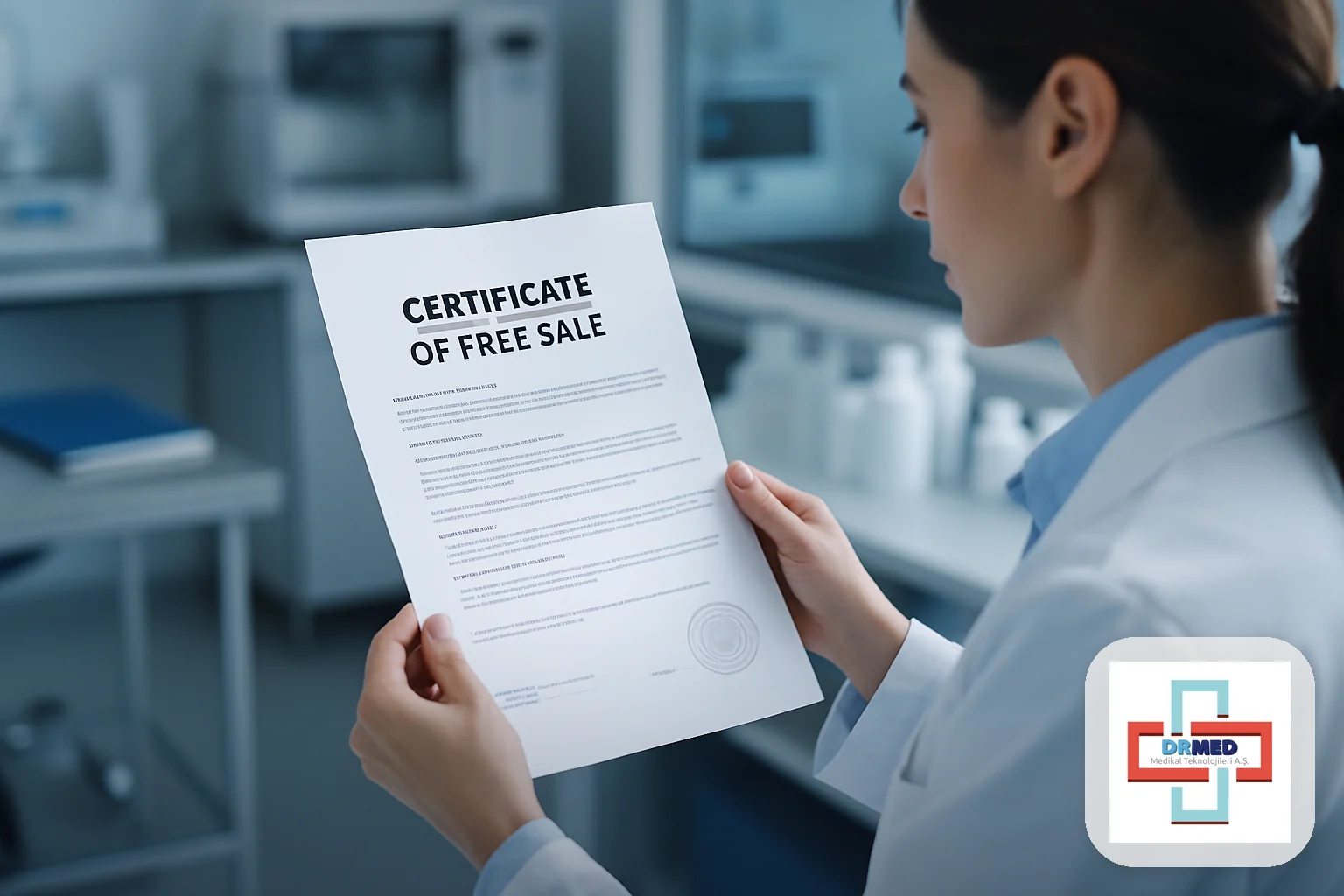
Few documents cause as much confusion in cross-border medical and pharmaceutical trade as the Certificate of Free Sale (CFS). Buyers sometimes treat it as a stamp of quality; some sellers present it as proof their product is "approved." Neither reading is accurate. A CFS is a narrow, procedural document, and understanding exactly what it does and does not establish is essential for anyone evaluating a supplier or preparing a market-entry file.
What a Certificate of Free Sale Actually States
A CFS is issued by a government authority (or, in some jurisdictions, a recognized trade body) in the product's country of manufacture or origin. Its core statement is narrow: the product is legally manufactured and freely sold in that home market, and it is not subject to a sale restriction, ban, or withdrawal there. Some issuing authorities also confirm the manufacturing site holds relevant licensing. That is the full scope of the claim. It says nothing about how the product performs, what evidence supports its safety, or whether it meets the regulatory requirements of the country it is being exported to.
Names Vary, Function Is Similar
Terminology differs by jurisdiction and product category, which is itself a common source of confusion:
| Term | Typically used for | |---|---| | Certificate of Free Sale (CFS) | General export documentation, many product types | | Certificate to Foreign Government (CFG) | US FDA-regulated products | | Certificate of Exportation | Some US-regulated categories | | Free Sale Certificate / Export Certificate | Common generic label used internationally |
Despite the different names, the underlying function across most of these is the same: confirming lawful domestic marketing status, not certifying safety or efficacy for a foreign market.
What a CFS Does Not Prove
This is where misunderstanding causes the most practical problems. A CFS does not:
- Certify that the product meets the importing country's own regulatory requirements (those are assessed separately, often through a full dossier review).
- Substitute for device or drug registration, marketing authorization, or a CE mark and the technical file behind it.
- Confirm current manufacturing quality; it does not replace a valid ISO 13485 or GMP certificate, which speaks to the quality management system rather than legal sale status.
- Guarantee the exact product formulation, labeling, or specification is identical to what will be sold in the destination market, since some manufacturers legitimately vary formulations across markets.
Treating a CFS as a proxy for any of these is a documentation gap that tends to surface later in a review, not earlier, which makes it more costly to resolve.
Why Regulators and Buyers Still Ask for It
Despite its limits, the CFS remains a standard requirement in most registration dossiers, and for good reason: it establishes a baseline of legitimacy that is otherwise hard to verify quickly. It tells an evaluator that the product is not effectively banned, recalled, or restricted at home, which is a reasonable first screen before the deeper technical review begins. For institutional buyers conducting supplier due diligence, a current, authentic CFS is one useful data point among several, not a standalone assurance.
Validity, Legalization and Common Pitfalls
A few procedural details cause recurring delays:
- Expiry. Most CFS documents are valid for a limited period (commonly one to two years); an expired certificate is treated as absent, not merely outdated.
- Legalization requirements. Depending on the destination country, a CFS may need an apostille, consular legalization, or notarization before it is accepted, a step that is easy to underestimate on a tight timeline.
- Product-specific scope. A CFS issued for one product or product family generally does not cover a different formulation or model; matching the certificate's stated scope to the specific item being imported is a frequent point of scrutiny.
The Takeaway
A Certificate of Free Sale is a useful, standardized piece of evidence that a product is legitimately sold in its home market, and most regulators expect to see one as part of a broader submission. It is not, on its own, a safety certification, a quality-system certificate, or proof of compliance with the importing country's regulations. Distributors and buyers who understand this distinction are better positioned to request the fuller evidence package (quality certification, technical documentation, local registration) that a CFS was never designed to replace.
This is general educational information, not legal or regulatory advice; consult the current official texts and your competent authority.