LED Photobiomodulation in Skin Care: The Current Evidence
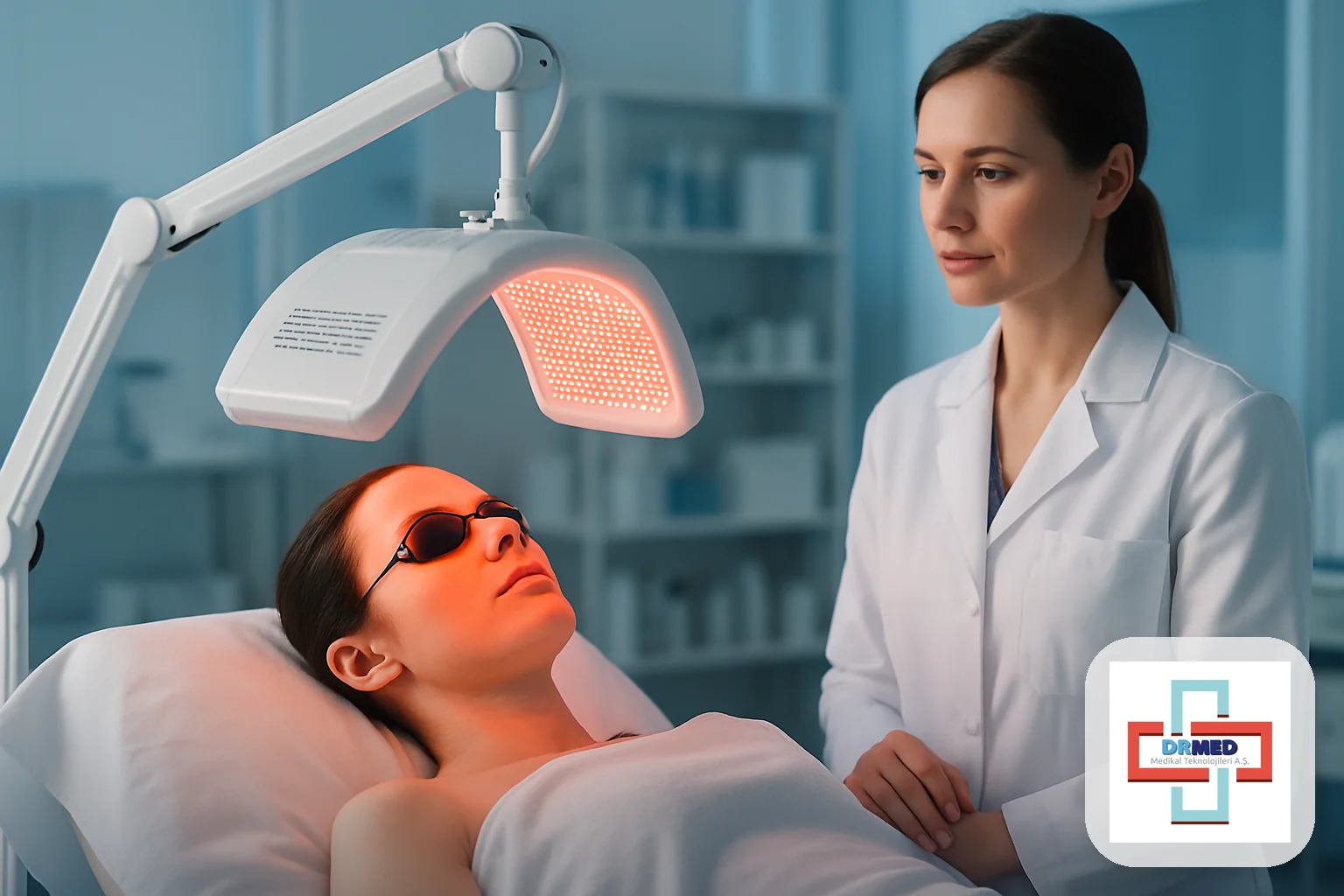
LED-based light therapy, more precisely termed photobiomodulation (PBM), has moved from a niche wound-care tool into a mainstream feature of professional treatment menus and at-home devices. For distributors and clinics evaluating these products, the color of the light and the marketing claims attached to it matter far less than the underlying mechanism, the wavelength specification and the strength of the supporting literature.
How Photobiomodulation Is Thought to Work
The leading explanatory model holds that specific wavelengths of visible and near-infrared light are absorbed by chromophores within skin cells, most notably cytochrome c oxidase in the mitochondrial electron transport chain. This absorption is proposed to modestly increase adenosine triphosphate (ATP) production and trigger secondary signaling cascades, including transient shifts in reactive oxygen species and nitric oxide that influence cellular activity. Downstream effects reported in laboratory and clinical settings include changes in fibroblast activity and modulation of local inflammatory signaling. It is worth noting that while this mitochondrial model is the most widely referenced explanation, the precise cascade from photon absorption to a visible skin outcome is not fully settled and remains an active area of photobiology research.
Wavelength and Dose Are Not Interchangeable
Devices marketed as "LED therapy" span a wide range of specifications, and these differences are clinically meaningful rather than cosmetic:
- Red light (roughly 630-670 nm) is generally described as targeting more superficial dermal structures.
- Near-infrared light (roughly 800-850 nm) penetrates deeper into tissue due to longer wavelength and reduced scattering.
- Blue light (roughly 415-470 nm) is associated in the literature with antimicrobial and photodynamic mechanisms relevant to acne-prone skin, rather than a collagen-stimulation pathway.
Beyond wavelength, the fluence (energy delivered per unit area over time, a function of irradiance and exposure duration) is a critical variable that differs substantially between devices and published protocols. Because study outcomes are tied to a specific device's calibrated output, results from one study or device cannot be assumed to generalize to a differently specified device, even if both are marketed under the same "LED" or "photobiomodulation" label.
What the Clinical Literature Currently Supports
Systematic reviews of PBM for skin rejuvenation and adjunctive wound care generally describe the evidence base as promising but heterogeneous. Study designs, device parameters, treatment schedules and outcome measures vary considerably across the published literature, which limits direct comparison and makes pooled conclusions difficult. For acne-related indications, the literature on blue light is somewhat more consolidated, though still described by reviewers as needing larger, better-controlled trials. Where a reviewed study reports a favorable outcome, that result is specific to the device, protocol and population studied and should not be extrapolated as a general property of "LED light" as a category. Emerging indications, such as combination PBM protocols alongside other energy-based or topical modalities, are considered even less settled and should be treated as an area of ongoing investigation rather than an established standard of care.
Categories of Devices in the Market
| Category | Typical setting | Key specification to verify | |---|---|---| | Single-wavelength panels | Professional/clinic | Peak wavelength, irradiance uniformity | | Multi-wavelength combination masks or panels | Professional or at-home | Wavelength mix, per-channel output | | Handheld or wearable devices | At-home | Total energy delivered per session |
Regulatory classification for these devices varies by jurisdiction and depends heavily on the intended-use claims a manufacturer makes; a device marketed strictly for general wellness may sit in a different regulatory category than one marketed with a specific dermatological indication.
Procurement and Regulatory Considerations
For distributors and institutional buyers, the meaningful due-diligence points are technical and documentary rather than promotional:
- Verified wavelength output and irradiance, ideally supported by independent test data rather than marketing collateral alone.
- The regulatory classification the manufacturer has actually obtained for the stated intended use, and in which markets.
- Any clinical evidence package provided by the manufacturer, reviewed on its own merits rather than taken as proof of a broader category claim.
- Basic safety features relevant to the wavelength range, such as eye protection guidance where applicable.
The Takeaway
Photobiomodulation rests on a plausible, actively studied biological mechanism, but the clinical evidence for skin-care applications remains variable in quality and specific to the wavelength, dose and protocol tested. For procurement and clinical decision-making, the wavelength specification, calibrated output and manufacturer's evidence dossier are the meaningful basis for evaluating a device, not the marketing language built around the word "LED."
This article is educational and does not constitute medical advice. Product selection, dosing and administration must always be performed by a qualified healthcare professional.