
PDO, PLLA and PCL Threads: A Material Comparison
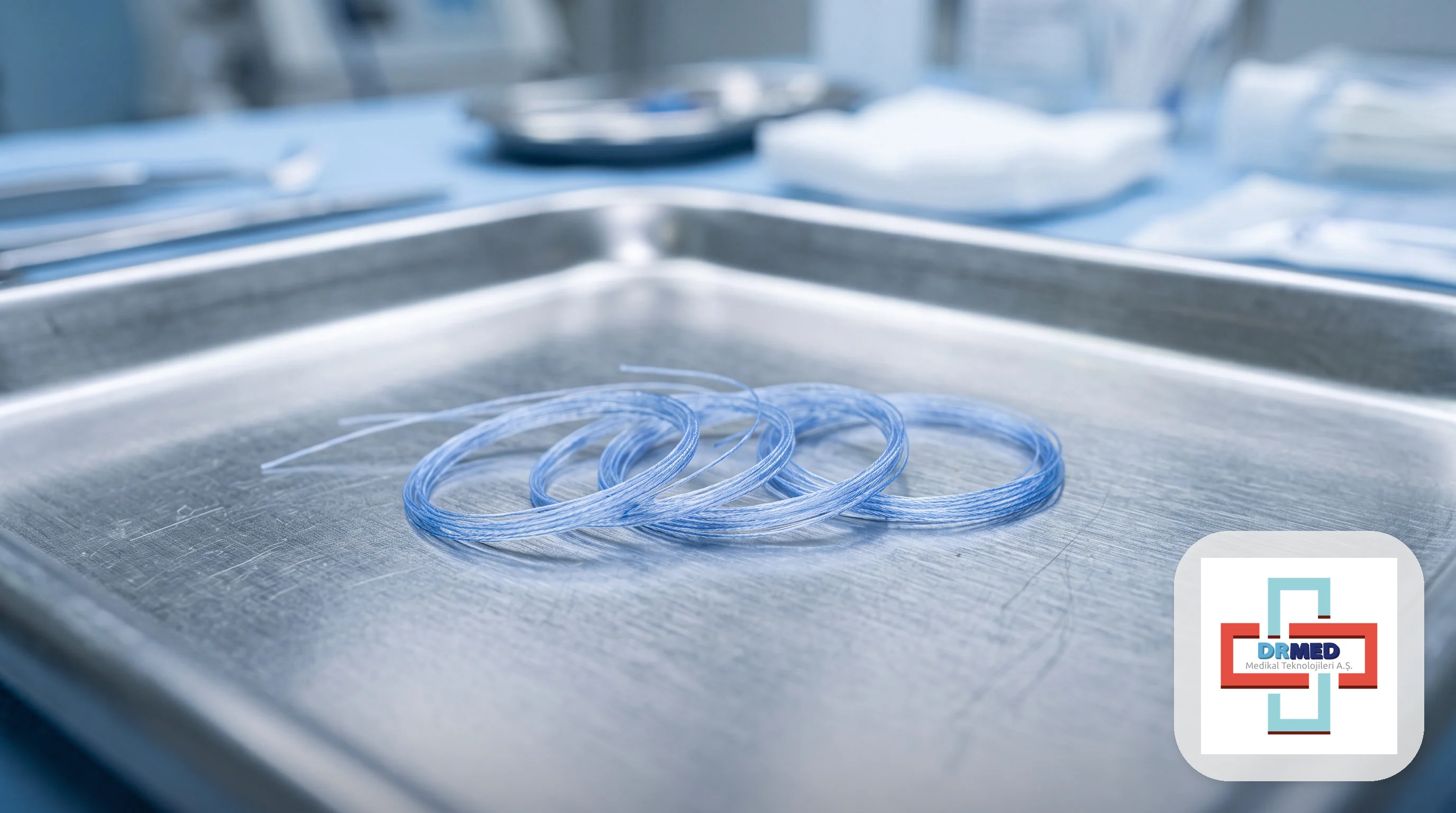
Thread-lifting procedures rely on absorbable polymer threads inserted beneath the skin to produce a combination of mechanical support and, over time, a tissue response. Three polymer families dominate the category (polydioxanone (PDO), poly-L-lactic acid (PLLA), and polycaprolactone (PCL)) and they are not interchangeable. Each degrades on a different timeline and is associated with a different balance of immediate mechanical effect versus longer-term biological response. This article outlines those material differences at a conceptual level for a distributor, clinic and procurement audience; it does not describe insertion technique, thread selection for a given patient, or any protocol.
What all three materials have in common
PDO, PLLA and PCL are all biodegradable, bioabsorbable polymers long used in surgical sutures before their adaptation into thread devices. Once placed, a thread can contribute a temporary mechanical effect while the material is intact, and as it degrades it is generally understood to prompt a fibroblastic response: the recruitment of cells that lay down new collagen along the thread's path. The relative weight of these two effects (mechanical versus biostimulatory) is the main axis along which the three materials are usually compared.
Polydioxanone (PDO): the fastest-degrading, most established option
PDO has the longest track record as a thread material and the shortest degradation window of the three, typically discussed in terms of months rather than years. Because it breaks down relatively quickly, PDO threads are generally associated with a shorter period of mechanical tension and a comparatively modest, earlier-resolving collagen response. This shorter timeline is one reason PDO devices are often positioned as an entry-level or lower-cost category within thread portfolios, and why manufacturers frequently pair them with barbed or cog designs intended to maximize the mechanical contribution during the window the material is present.
Poly-L-Lactic Acid (PLLA): prioritizing the biological response
PLLA is the same polymer family used in injectable collagen-biostimulator products, and PLLA threads are generally discussed as leaning further toward the biostimulatory end of the spectrum. PLLA degrades more slowly than PDO (commonly described in terms of many months to roughly a year or more) which is associated with a more gradual, sustained fibroblastic response as the material breaks down. The trade-off is a comparatively lower emphasis on immediate mechanical lift relative to PDO's barbed variants, since PLLA thread designs are often smoother-surfaced.
Polycaprolactone (PCL): the longest degradation window
PCL sits at the far end of the timeline, with degradation generally described in terms of up to roughly two years or more, the longest of the three. This extended presence is associated with the most prolonged collagen-stimulation window among the group. PCL is a newer entrant to the aesthetic thread category relative to PDO and PLLA, and its longer residence time is the central point manufacturers and clinicians weigh against its typically higher cost per device.
A comparative snapshot
| Material | Typical degradation window | Emphasis | |---|---|---| | PDO | Months | Faster-resolving; often paired with mechanical (barbed) designs | | PLLA | Many months to ~1 year+ | More biostimulation-weighted | | PCL | Up to ~2 years+ | Longest sustained stimulation window |
These are general, illustrative ranges reported in the device literature, not fixed specifications for any single product; actual degradation depends on thread design, diameter and manufacturing process, and varies between suppliers.
Why this is a device-selection question, not a generic one
Because clinical outcomes with thread devices depend heavily on material chemistry, thread architecture (smooth, barbed, cogged, or molded) and manufacturing quality, procurement teams and clinics evaluate thread suppliers on more than polymer type alone: consistency of raw material sourcing, sterilization validation, and CE/regulatory documentation all factor into a sound sourcing decision. None of the general timelines above substitute for a device's own instructions for use (IFU) or the clinical judgment of the treating professional, who selects a specific material and design based on training, the individual case, and the manufacturer's approved indications.
The takeaway
PDO, PLLA and PCL threads share a common absorbable-polymer basis but sit at different points on a mechanical-versus-biostimulatory spectrum, largely driven by how quickly each material degrades. For clinics and distributors, understanding this spectrum supports better-informed category conversations and supplier due diligence. It is not a basis for selecting a device for an individual patient, which remains a clinical decision grounded in training and the product's approved IFU.
This article is educational and does not constitute medical advice. Product selection, dosing and administration must always be performed by a qualified healthcare professional.