REACH, RoHS and ISO 10993: Materials Safety Basics
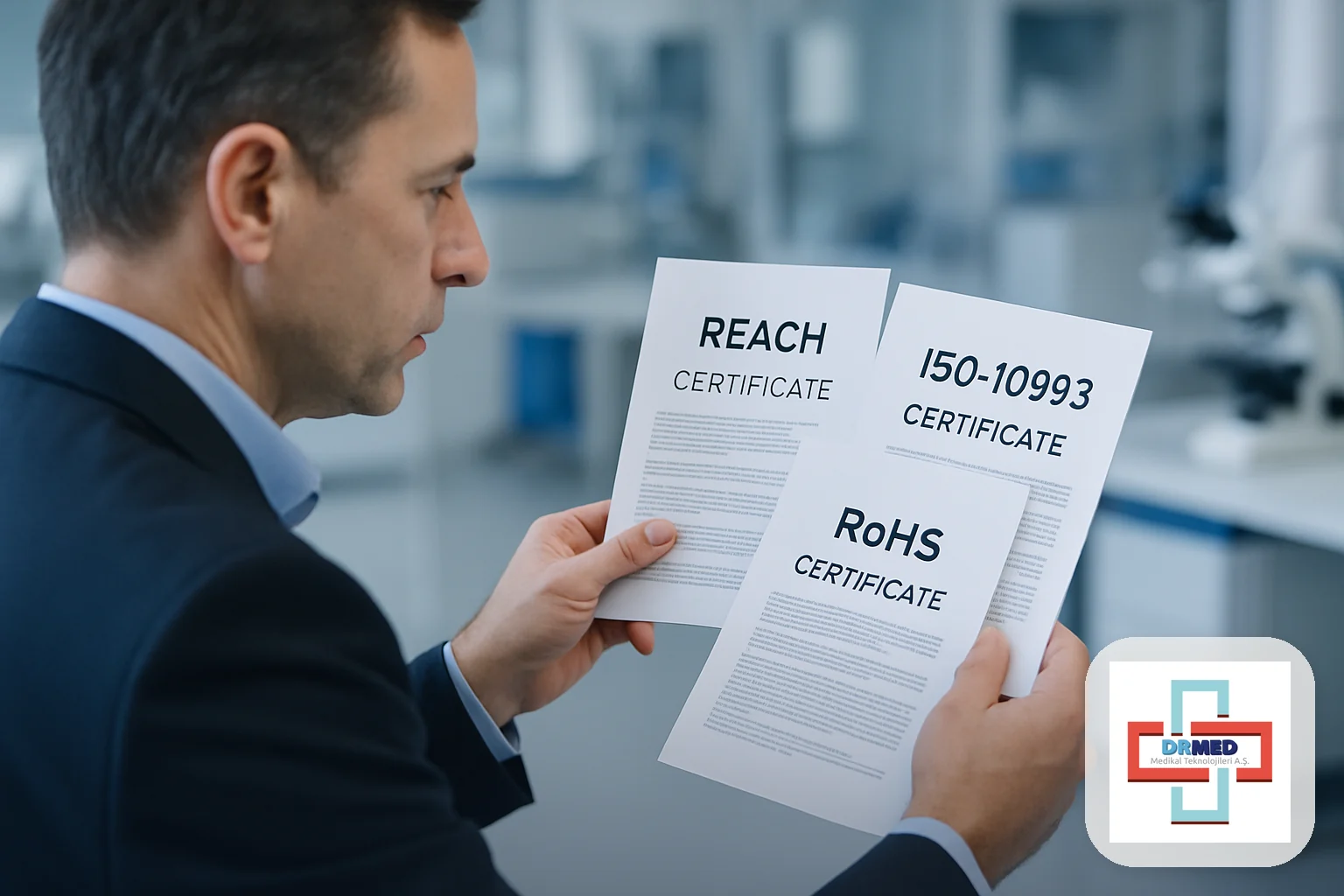
A distributor evaluating a new supplier is handed three different certificates (one referencing REACH, one referencing RoHS, and one referencing ISO 10993) and asked to confirm the material is "compliant." The trouble is that these three frameworks answer three different questions, and a certificate for one says nothing about the others. Knowing what each actually covers is the first step to reading supplier documentation correctly rather than treating any single stamp as a blanket assurance.
Three Different Frameworks, One Shared Goal
REACH, RoHS and ISO 10993 all exist to manage the risk that a material poses to people or the environment, but they sit at different points in a product's life. REACH is a chemical registration and restriction framework. RoHS is a substance-restriction rule aimed originally at electronics. ISO 10993 is a biological evaluation standard for materials that contact the human body. A product can be fully compliant with one and still need separate evidence for the others. They are not substitutes for each other.
REACH: Registration, Restriction and the SVHC List
REACH (Registration, Evaluation, Authorisation and Restriction of Chemicals) is an EU regulatory framework that requires manufacturers and importers to register chemical substances they place on the market above certain volume thresholds, and it maintains a list of Substances of Very High Concern (SVHC). For a distributor, the practical question is usually narrower than full REACH registration: whether a supplied article contains an SVHC above the applicable communication threshold, which triggers a duty to inform the customer. A REACH statement from a supplier should specify which SVHC list version it was checked against and the date of that check, since the list is updated periodically.
RoHS: Restricting Hazardous Substances
RoHS (Restriction of Hazardous Substances) restricts the presence of specific substances (historically things like lead, mercury and certain flame retardants) in electrical and electronic equipment, above defined concentration limits per homogeneous material. RoHS matters directly for devices with electronic components (diagnostic instruments, powered devices, chargers) but has no bearing on a purely biological or chemical material claim. A RoHS declaration of conformity is a statement about restricted substances in the electronics, not about biocompatibility or general chemical safety.
ISO 10993: Biological Evaluation of Medical Devices
ISO 10993 is a series of standards covering the biological evaluation of medical devices, the question of whether a material that contacts tissue, mucosa or blood is likely to cause an adverse biological response. Rather than prescribing one fixed test panel for every device, it works through a risk-based framework: the nature and duration of body contact determines which endpoints (such as cytotoxicity, sensitization or irritation) need to be evaluated, and existing data on a material already in equivalent use can sometimes substitute for new testing. A supplier claiming "ISO 10993 compliant" should be able to show which parts of the standard were applied and to which specific device configuration, since the standard is a framework rather than a single pass/fail test.
How the Three Interact in Practice
| Framework | Core question | Typical relevance | |---|---|---| | REACH | Does the material contain a restricted or high-concern chemical substance? | Any imported article, chemical substance or mixture | | RoHS | Does electrical/electronic equipment stay under hazardous-substance limits? | Devices with electronic components | | ISO 10993 | Is the material biologically safe for its intended body contact? | Devices, fillers and materials that contact tissue |
A single product can carry documentation under all three, and a buyer should expect the certificate that actually matches the product category rather than accepting whichever one the supplier happens to provide first.
The Takeaway
REACH, RoHS and ISO 10993 protect against different risks and are evaluated through different processes, so a compliance statement for one should never be read as covering the others. A buyer's due-diligence file for a given product is complete only when it holds evidence for every framework that is actually relevant to that product's material, electronics and intended body contact.
This is general educational information, not legal or regulatory advice; consult the current official texts and your competent authority.