Serialization and Anti-Counterfeiting in Pharma Supply Chains
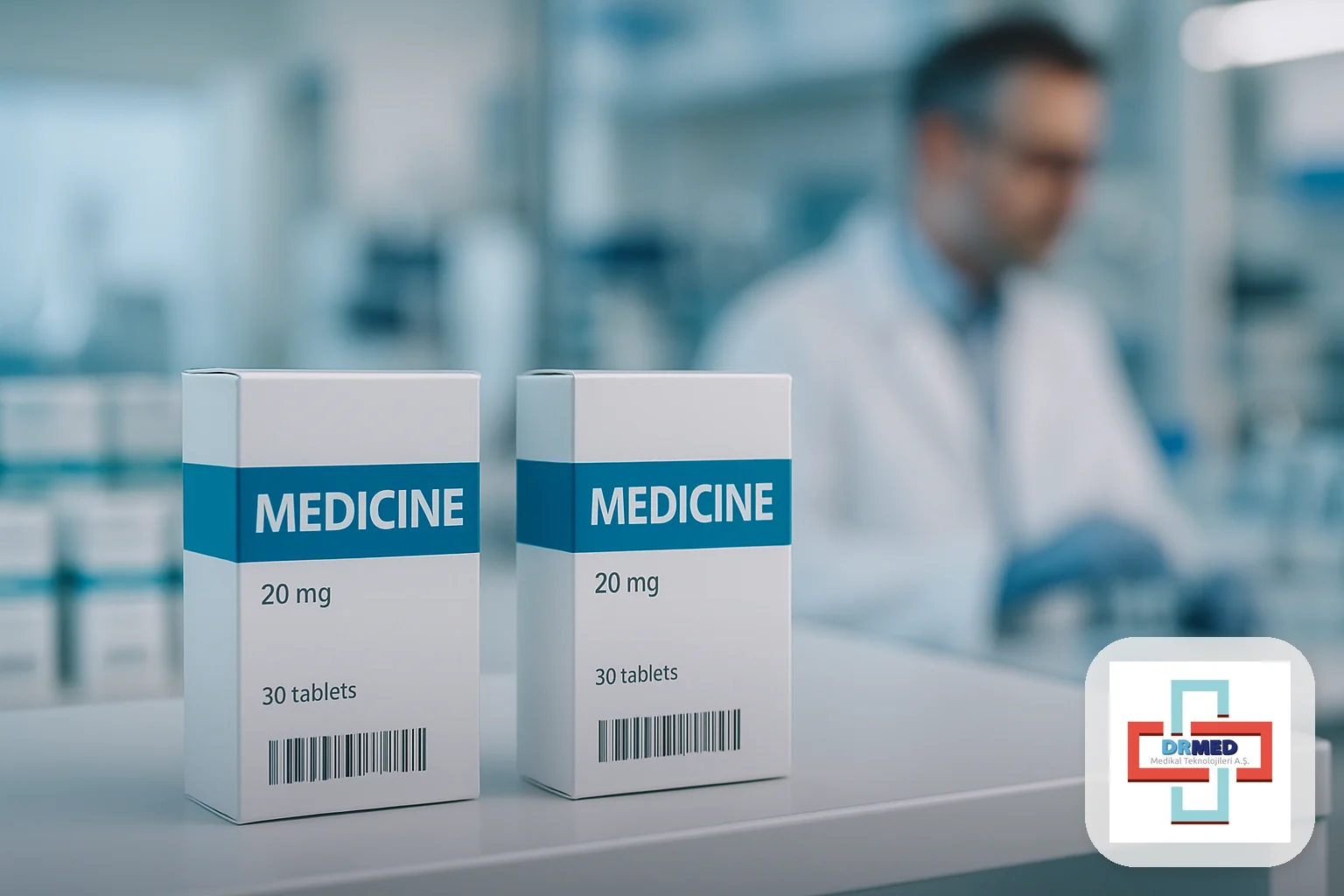
A counterfeit or diverted medicine looks, on the shelf, exactly like the genuine product next to it, which is precisely why the pharmaceutical industry has spent the past two decades building systems that do not rely on how a pack looks. Serialization is the core of that effort: assigning each individual saleable unit a unique, machine-readable identifier so its authenticity and history can be checked electronically rather than assumed from appearance.
What Serialization Actually Means
At its simplest, serialization means printing a unique code (typically a 2D data matrix) on each pack, encoding a product identifier, batch number, expiry date and a unique serial number for that specific unit. No two packs of the same product share the same serial number. This is a meaningful step beyond a standard batch or lot number, which is shared by potentially thousands of units and only narrows a problem to "somewhere in this batch." A serial number narrows it to one physical pack.
Above the individual pack, many systems also use aggregation: linking serialized units to the case and pallet they are packed into, so that scanning one higher-level barcode can confirm what should be inside it. Aggregation is what makes large-volume verification practical, a warehouse does not need to scan every individual carton if the case-level record is trustworthy.
The Problem the System Is Designed to Address
Falsified medicines (products that misrepresent their identity, source or history, whether wholly fake, diverted from another market, or repackaged after tampering) can enter a supply chain at points where oversight is weakest: informal secondary wholesalers, cross-border diversion, or gaps between legitimate handlers. Because the risk is illustrative rather than a fixed global figure, most regulators frame it broadly: a small but real share of the medicines supply chain, concentrated in specific product categories and markets, is vulnerable to this kind of intrusion. Serialization does not physically stop a counterfeit from being manufactured; it makes a counterfeit or diverted unit detectable the moment someone in the legitimate chain checks it against the system of record.
Verification Along the Chain
The value of a unique identifier depends entirely on whether it gets checked. In a mature system:
- Manufacturers upload each serial number to a national or regional repository at the point of production.
- Wholesalers and distributors can scan incoming stock against that repository to confirm a code exists, has not already been used, and matches the expected product.
- At the point of dispense, the code is typically decommissioned (marked as used) so the same serial number cannot be presented again elsewhere.
This last step is what closes the loop: a copied or reused code fails verification the second time it appears, even if the physical counterfeit is a convincing visual match.
Tamper-Evident Packaging as a Complementary Layer
Serialization is a digital control; tamper-evident packaging is its physical counterpart. A safety feature (a seal, perforation, or closure that visibly breaks on first opening) gives a handler or patient a way to notice interference without needing a scanner at all. The two layers address different failure modes:
| Layer | Detects | Requires | |---|---|---| | Serialization / verification | Diverted, falsified or duplicated identity | A scan against a repository | | Tamper-evident packaging | Physical opening or resealing after manufacture | Visual inspection only |
Neither layer substitutes for the other; regulatory frameworks in many markets require both precisely because each covers a gap the other leaves open.
What This Means for Distributors and Buyers
For a distributor, participating honestly in a serialization system is an operational discipline as much as a compliance one: scanning incoming stock rather than trusting paperwork, reporting a verification failure rather than working around it, and keeping the systems that talk to national repositories properly maintained. For an institutional buyer, a supplier's willingness to explain (concretely) how its serialization and verification process works is a more useful signal than a general assurance that "the product is genuine."
The Takeaway
Serialization turns a claim about a medicine's authenticity into something that can be checked rather than trusted on sight. Combined with tamper-evident packaging, it gives every handler in the chain, from manufacturer to point of dispense, a practical way to catch a falsified or diverted product before it reaches a patient.
This is general educational information, not legal or regulatory advice; consult the current official texts and your competent authority.