
Skin pH and Barrier-Friendly Product Formulation
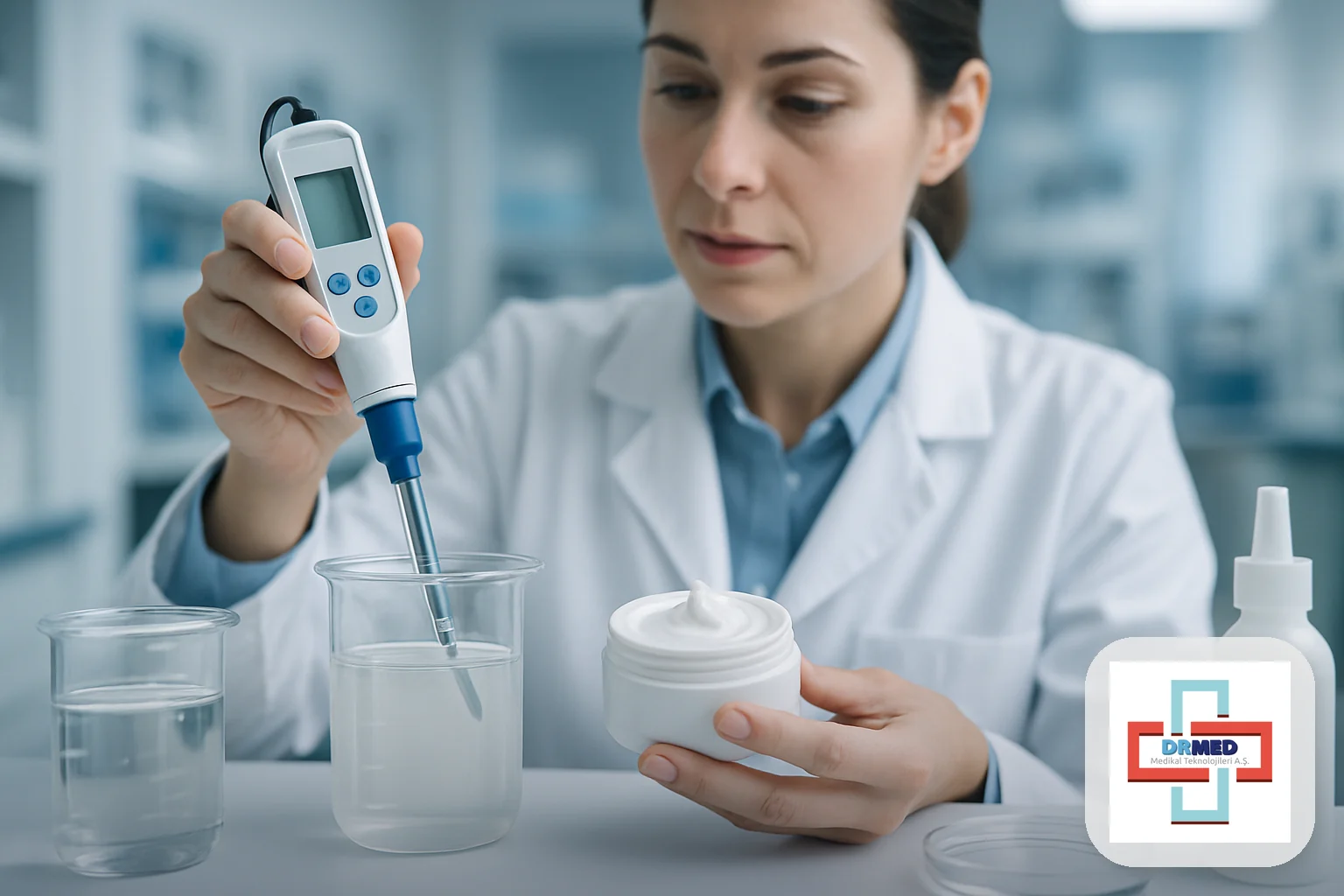
Skin surface pH is not a cosmetic footnote; it is a measurable physiological parameter that governs enzyme activity, lipid organization and microbial balance in the outermost layers of skin. For institutional buyers and clinicians evaluating topical products, formulation pH is a quality and performance variable, not a marketing detail, and it deserves the same scrutiny as active ingredient concentration or preservative system.
The Acid Mantle: A Physiological Baseline
Healthy skin surface pH typically sits in a mildly acidic range, commonly cited around 4.5 to 5.5, a zone often referred to as the acid mantle. This acidity results from a combination of factors: free fatty acids released by sebaceous activity, the breakdown products of the natural moisturizing factor, and metabolic byproducts of resident skin microorganisms. The acid mantle is not a static coating; it is an emergent property of ongoing biochemical processes in the stratum corneum, which is why disrupting it even temporarily can have measurable downstream effects.
Why pH Governs Enzyme Activity in the Barrier
Several enzymes essential to barrier maintenance are pH-dependent, meaning they function efficiently only within a narrow acidic window. Enzymes involved in processing lipids into ceramides, and proteases responsible for corneodesmosome breakdown during normal desquamation, both show optimal activity near the skin's native acidic range. When surface pH shifts toward neutral or alkaline, these processes can become less efficient, which is one proposed mechanism linking alkaline product use to disrupted barrier repair and altered shedding of surface cells. This is an active area of research, and the magnitude of the effect varies with formulation and individual skin status.
Antimicrobial and Barrier Implications
An acidic surface is generally considered less hospitable to certain transient pathogenic organisms while remaining compatible with the skin's resident microbial community. Alkaline conditions, by contrast, have been associated in some studies with shifts in microbial composition and reduced resistance to irritants. Clinicians assessing patients with conditions such as atopic dermatitis or rosacea, where barrier function is already compromised, often consider surface pH alongside other factors when evaluating suitable product formulations, though pH is one variable among several rather than a standalone diagnostic marker.
Formulation pH Considerations for Common Actives
Formulation chemists balance product pH against both barrier compatibility and active-ingredient performance, since many actives have their own pH-dependent behavior:
| Ingredient class | General pH consideration | |---|---| | Alpha-hydroxy acids (e.g. glycolic acid) | Efficacy is linked to the proportion of un-ionized "free acid," which is pH-dependent | | L-ascorbic acid (vitamin C) | Commonly formulated at low pH for stability and penetration, which can increase irritation potential | | Retinoids | Generally more stable at slightly acidic to near-neutral pH; extremes can accelerate degradation | | Surfactant-based cleansers | Traditional soap is alkaline; syndet and pH-balanced cleansers aim to minimize barrier disruption |
These are general formulation principles used to illustrate how pH intersects with ingredient chemistry, not claims about the performance of any specific branded product.
Measuring and Documenting pH as a Quality Parameter
For procurement and quality teams, formulation pH is a straightforward, low-cost parameter to verify: it can be measured directly with a calibrated pH meter or, less precisely, with surface-contact strips, and it is commonly listed on a certificate of analysis or technical data sheet. Buyers evaluating a barrier-oriented or sensitive-skin product line can reasonably request pH specifications and batch-to-batch consistency data, since pH drift across production lots can signal broader formulation stability issues, not just a barrier-compatibility concern.
The Takeaway
Skin surface pH is a physiological signal, not a cosmetic buzzword, and it interacts with enzyme activity, microbial balance and active-ingredient chemistry in ways that are directly relevant to product selection. Treating formulation pH as a documented quality parameter, alongside concentration and preservative data, gives clinicians and procurement teams a more complete basis for evaluating barrier-friendly product lines. As with most areas of skin physiology, research into the precise clinical impact of small pH variations continues to evolve, and individual patient response remains variable.
This article is educational and does not constitute medical advice. Product selection, dosing and administration must always be performed by a qualified healthcare professional.