Wound Healing Phases and How Regenerative Products Support Them
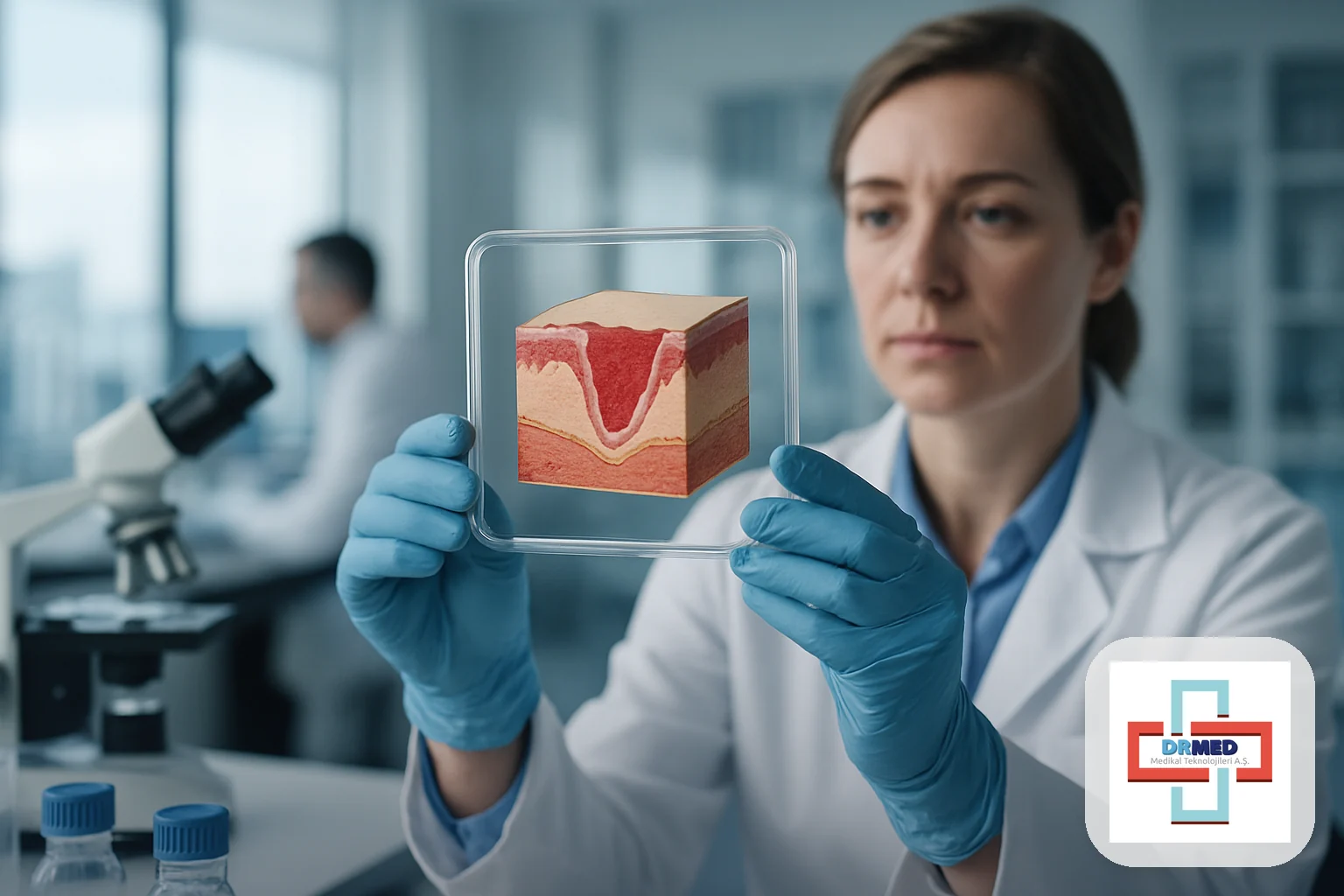
Wound healing is not a single event but a sequence of overlapping biological phases, each with its own cell types, signalling molecules and timeline. Understanding this sequence is useful for anyone evaluating regenerative or biostimulatory products, because most of them are designed to interact with (or support) a specific point in this natural cascade rather than to replace it.
The Four Overlapping Phases
Tissue repair is classically described in four phases: hemostasis, inflammation, proliferation and remodeling. They are sequential in emphasis but overlap considerably in practice, inflammatory signalling begins within minutes of injury, while remodeling can continue for a year or more. No single product or intervention acts on all four phases equally; most act on one or two.
Hemostasis: The Immediate Response
Within seconds of tissue injury, platelets aggregate at the site and a fibrin clot forms, both to stop bleeding and to create a provisional matrix, a temporary scaffold that other cells will later migrate across. Platelets are not passive plugs: as they activate, they degranulate and release growth factors such as PDGF and TGF-β, which begin recruiting the cells needed for the next phase before hemostasis is even complete. This is the biological basis for platelet-concentrate approaches, which aim to deliver a denser package of these early signals directly to the tissue.
Inflammation: Clearing and Signaling
Over the following hours to days, neutrophils and then macrophages arrive to clear debris and any contaminating microorganisms. Macrophages in particular are now understood to be more than clean-up cells: they shift phenotype over the course of this phase, moving from a pro-inflammatory profile toward one that actively promotes the transition into tissue rebuilding. Inflammation that is too brief or too prolonged is associated with impaired healing, which is why this phase is often described as needing to be well-regulated rather than simply present or absent.
Proliferation: Rebuilding the Matrix
From roughly day three onward, the tissue enters an active building phase. Fibroblasts migrate into the wound and begin synthesizing new extracellular matrix, initially rich in Type III collagen and glycosaminoglycans such as hyaluronic acid. In parallel, angiogenesis (the formation of new capillary networks) restores blood supply to the healing area, and, where the wound has an open surface, keratinocytes migrate across it to re-establish coverage. This is the phase most associated with visible tissue volume and texture change, and it is where many regenerative and biostimulatory products are hypothesized to exert their principal effect, by supporting fibroblast activity or matrix synthesis.
Remodeling: Restoring Strength
The final and longest phase can extend for many months. Type III collagen laid down during proliferation is gradually replaced with the stronger, more organized Type I collagen, cross-linking increases, and the tissue's tensile strength rises, though it typically plateaus well below that of uninjured tissue. Clinically, this is the phase in which early results from a regenerative treatment continue to evolve, sometimes for months after the procedure, which is a key reason outcome assessment for such modalities is generally made at a delayed interval rather than immediately.
Where Regenerative Products Intersect With Biology
Different product categories are designed with different phases in mind, in general terms:
| Category | Primary phase of interest | General mechanism | |---|---|---| | Platelet concentrates | Hemostasis / early inflammation | Concentrated growth-factor signalling | | Polynucleotides | Inflammation / proliferation | Tissue-repair signalling, hydration support | | Collagen biostimulators | Proliferation / remodeling | Fibroblast stimulation, gradual matrix building |
This mapping is a simplification (actual tissue response depends on the specific formulation, the tissue type, and individual biology) but it illustrates why "regenerative" is not one mechanism. Evidence quality and clinical consensus vary by category and indication, and for some of the newer approaches, the supporting data is still described as emerging rather than settled.
The Takeaway
Wound healing proceeds through overlapping, tightly regulated phases, and most regenerative products are best understood as supporting one part of that natural sequence rather than replacing the process wholesale. For distributors and clinics, this framework is a useful lens for evaluating a product's proposed mechanism against where (and how well-supported) its claimed point of action actually sits within the biology.
This article is educational and does not constitute medical advice. Product selection, dosing and administration must always be performed by a qualified healthcare professional.