Fitzpatrick Skin Types and Laser Safety Considerations
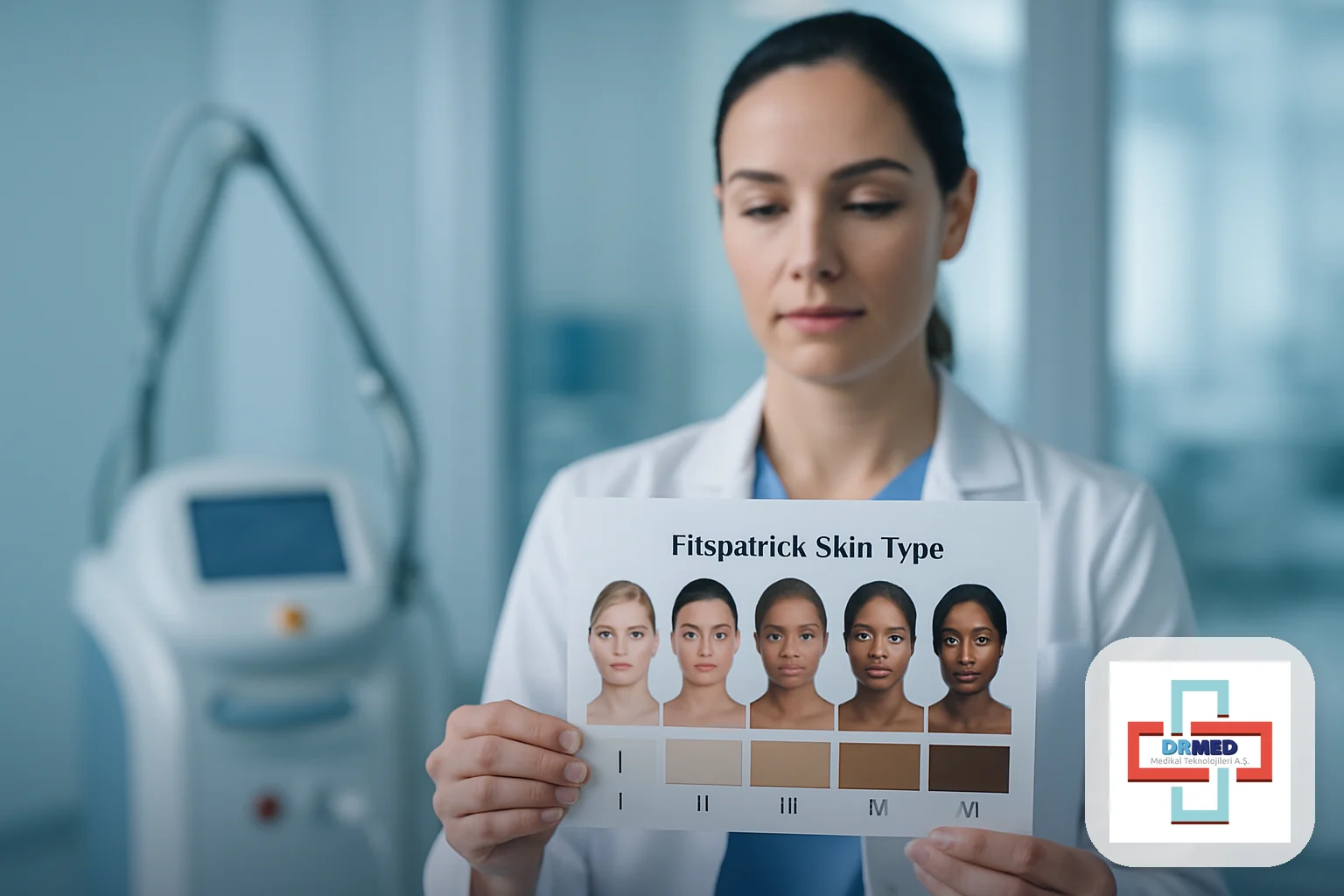
Energy-based devices work by delivering targeted energy into tissue, and how that energy is absorbed depends heavily on one variable: melanin content. The Fitzpatrick scale is the most widely used framework for describing that variable, and understanding what it does (and does not) capture is foundational to how clinicians reason about laser and light-based device safety.
What the Fitzpatrick Scale Actually Measures
Developed originally to classify sun-reactivity rather than laser risk, the Fitzpatrick scale groups skin into six types (I–VI) based on how skin responds to UV exposure, from always burns, never tans (Type I) to never burns, deeply pigmented (Type VI). It is a practical, widely adopted proxy for epidermal melanin density, which is the tissue property that most directly affects how a given wavelength of light is absorbed, scattered, or reflected at the skin's surface. It is a classification tool, not a diagnostic test, and clinicians generally combine it with direct visual assessment and patient history rather than relying on self-reported type alone.
Why Skin Type Changes the Laser-Tissue Interaction
Melanin is a strong chromophore across much of the visible and near-infrared spectrum, meaning it competes with the device's intended target (hair follicles, vascular structures, or dermal collagen, depending on the modality) for absorbed energy. In higher Fitzpatrick types, more incident energy is absorbed in the epidermis itself rather than reaching the intended target. This has two general consequences that the literature consistently describes:
- Reduced selectivity: the epidermis can absorb enough energy to sustain thermal injury even when the target structure is deeper.
- Elevated risk of pigmentary change: post-inflammatory hyperpigmentation (PIH) or, less commonly, hypopigmentation, is more frequently reported in darker skin types following aggressive thermal exposure.
These are general, well-described tendencies in the literature, not fixed outcomes; individual variation in melanin distribution, recent sun exposure, and device parameters all modulate actual risk for a given patient.
Common Risk Considerations Across Skin Types
| Consideration | Lower Fitzpatrick types (I–III) | Higher Fitzpatrick types (IV–VI) | |---|---|---| | Primary epidermal risk | Lower background chromophore competition | Greater competition from epidermal melanin | | Reported PIH frequency | Comparatively lower | Comparatively higher | | Test-spot value | Still useful | Generally considered especially important |
A test spot (a small trial treatment area assessed before full treatment) is a widely referenced precaution across skin types, and its role is often emphasized more heavily as Fitzpatrick type increases, since it allows a clinician to observe an individual patient's actual response before committing to a full treatment area.
Device Selection and Clinical Judgment
Wavelength, pulse duration and cooling technology are the engineering variables that manufacturers design around chromophore selectivity, and different device categories are built with different skin-type suitability in mind. Rather than a single "safe setting," the relevant principle is that device selection and parameters are matched to the individual patient (skin type among several inputs) by the treating professional, using the manufacturer's indications and contraindications as the reference framework rather than general marketing claims. Manufacturer instructions for use, published contraindications, and professional training remain the authoritative source for any specific device.
The Takeaway
The Fitzpatrick scale is a useful, widely adopted starting point for reasoning about laser and light-based device risk, but it is one input among several, not a substitute for direct clinical assessment, device-specific guidance, or individualized judgment. For distributors and buyers, understanding this framework helps contextualize why device manufacturers specify indicated skin types and why professional training on patient assessment remains central to safe use.
This article is educational and does not constitute medical advice. Product selection, dosing and administration must always be performed by a qualified healthcare professional.