GMP and ISO 13485: The Backbone of Quality Manufacturing
When a clinician draws up a syringe, they are trusting an entire manufacturing system they will never see. Two standards define whether that trust is warranted: Good Manufacturing Practice (GMP) and ISO 13485.
What GMP guarantees
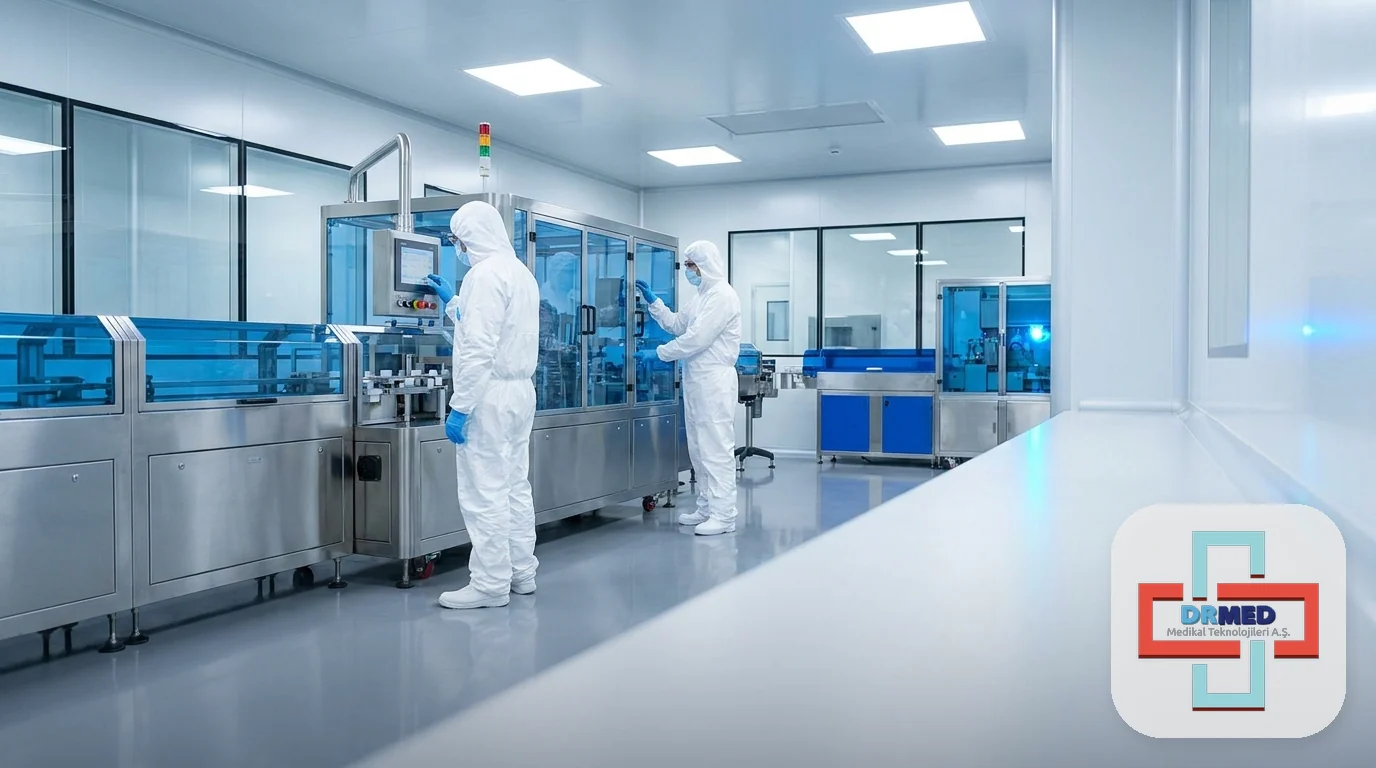
Good Manufacturing Practice is a set of principles ensuring products are consistently produced and controlled to quality standards appropriate to their intended use. In practice, GMP governs:
- Cleanroom environments with controlled air quality, particle counts and microbial limits
- Validated processes: every critical step is proven to produce the same result reproducibly
- Batch records: a complete, traceable documentation trail for every unit produced
- Raw-material control: incoming materials are tested and released before use
- Personnel training and hygiene protocols
The core idea of GMP is that quality cannot be inspected into a product at the end. It must be built in at every step.
What ISO 13485 adds
ISO 13485 is the internationally recognised standard for a Quality Management System (QMS) specific to medical devices. Where GMP focuses on the manufacturing floor, ISO 13485 wraps the whole organisation in a documented, auditable system covering:
- Risk management across the product lifecycle
- Design and development controls
- Supplier qualification and monitoring
- Corrective and Preventive Actions (CAPA)
- Traceability and post-market feedback loops
Certification is granted by an independent auditor and maintained through regular surveillance audits. It is a living commitment, not a one-time achievement.
Why buyers should care
For a distributor or institutional buyer, GMP and ISO 13485 are the difference between a supply chain built on evidence and one built on hope. They mean:
- Consistency: batch 100 performs like batch 1.
- Traceability: any issue can be tracked to its root cause and contained.
- Accountability: a documented system that can be audited and defended.
The DRMED standard
We treat quality documentation as a deliverable, not a formality. Structured verification, traceable sourcing and alignment with certification requirements are embedded in how we operate, because for medical and pharmaceutical supply, the paperwork is the product's guarantee.
This is general educational content about quality standards, not a certification claim for any specific product.