Platelet-Poor vs Platelet-Rich Plasma: What Changes?
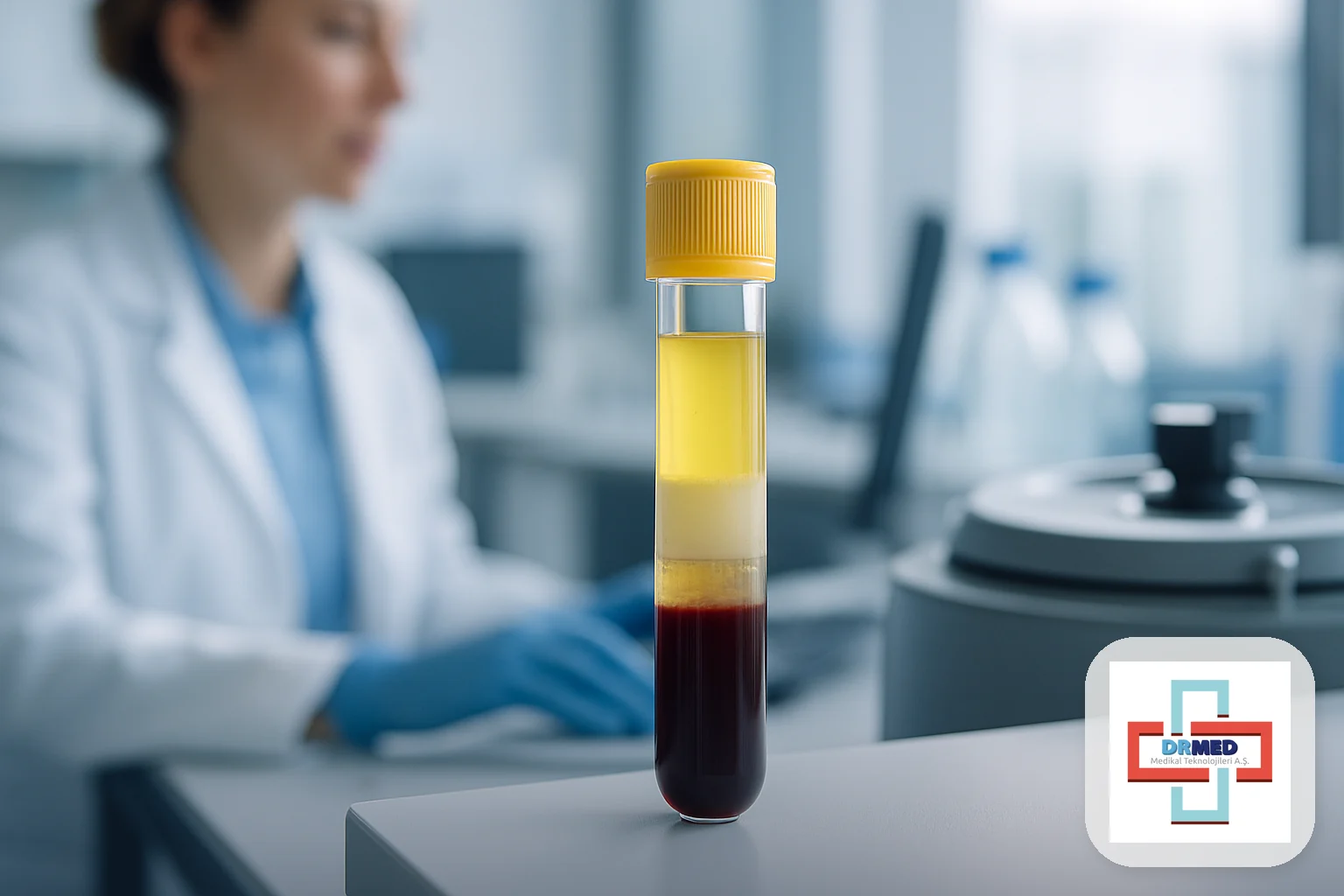
A single tube of whole blood, spun in a centrifuge, does not yield one product. It yields several fractions with very different biological profiles. Platelet-rich plasma (PRP) and platelet-poor plasma (PPP) both come out of that same tube, but they are prepared for different purposes, and confusing the two (or assuming "more centrifugation is always better") can lead to selecting the wrong kit for a given clinical goal. This is a practical, mechanism-level look at what actually changes between the two fractions.
What Centrifugation Actually Separates
Whole blood separates by density under centrifugal force into three broad layers: red blood cells at the bottom, a thin buffy coat of platelets and leukocytes in the middle, and plasma on top. The plasma layer itself is not uniform, the portion closest to the buffy coat carries the highest platelet density, while the topmost plasma, furthest from the cell layers, is progressively platelet-poor. Where a preparation kit draws its cut-off line, and how many spins it uses, determines whether the final product is classified as PRP or PPP.
Platelet-Rich Plasma: Concentrating the Signal
PRP protocols are designed to capture and concentrate the platelet-dense zone, typically aiming for 3–5× baseline platelet concentration in the final product. The clinical rationale is well established: platelets store growth factors such as PDGF, TGF-β and VEGF in their alpha granules, and concentrating them delivers a denser package of these signalling molecules to the target tissue than whole blood would. Preparation variables (spin speed, spin count, and whether leukocytes are retained (leukocyte-rich vs leukocyte-poor PRP)) meaningfully change the final composition and are the reason standardized, validated kits matter for reproducibility.
Platelet-Poor Plasma: Not "Leftover," a Different Tool
PPP is often described informally as the "leftover" fraction, but that undersells it. With most platelets removed, PPP is instead a fibrinogen-rich, cell-poor plasma. Its lower platelet load makes it less useful where a strong growth-factor bolus is the goal, but its plasma proteins (including fibrinogen) are what allow it to be activated into a fibrin matrix or scaffold, distinct from a platelet-signalling concentrate. Some autologous fibrin-matrix approaches and certain topical or scaffold applications draw specifically on this fraction rather than on the platelet-rich layer.
Why the Distinction Matters for Kit Selection
For distributors and clinics evaluating separation systems, the practical question is rarely "PRP or PPP in the abstract". It is whether a given kit's tube geometry, gel barrier and centrifugation protocol reliably produce the fraction the intended application calls for. A few points are worth checking when comparing systems:
- Separation gel design: a well-designed thixotropic gel barrier gives a cleaner, more reproducible split between fractions than a plain tube.
- Documented spin parameters: validated speed and duration (rather than an operator's improvised protocol) is what makes the platelet concentration in the final product predictable.
- Intended fraction, stated clearly: a system marketed for PRP should specify the platelet concentration range it targets; one intended to also yield PPP or a fibrin fraction should document that separately.
| Fraction | Relative platelet content | Primary role | |---|---|---| | PRP | Concentrated (3–5× baseline) | Growth-factor signalling delivery | | PPP | Depleted | Fibrinogen/plasma-protein source, scaffold matrix use |
The Takeaway
PRP and PPP are not competing products but complementary outputs of the same centrifugation process, each suited to a different biological role: one concentrates platelet signalling, the other supplies a platelet-poor plasma matrix. For institutional buyers, the relevant due-diligence question is whether a preparation system's validated protocol reliably delivers the specific fraction (and platelet concentration) that a given clinical application is designed around, rather than treating "PRP kit" as a single undifferentiated category.
This article is educational and does not constitute medical advice. Product selection, dosing and administration must always be performed by a qualified healthcare professional.